
Saciva is an early-stage student housing platform facing a credibility challenge. Through moderated usability research, I identified where students hesitated to engage and redesigned key flows to strengthen trust and decision confidence.
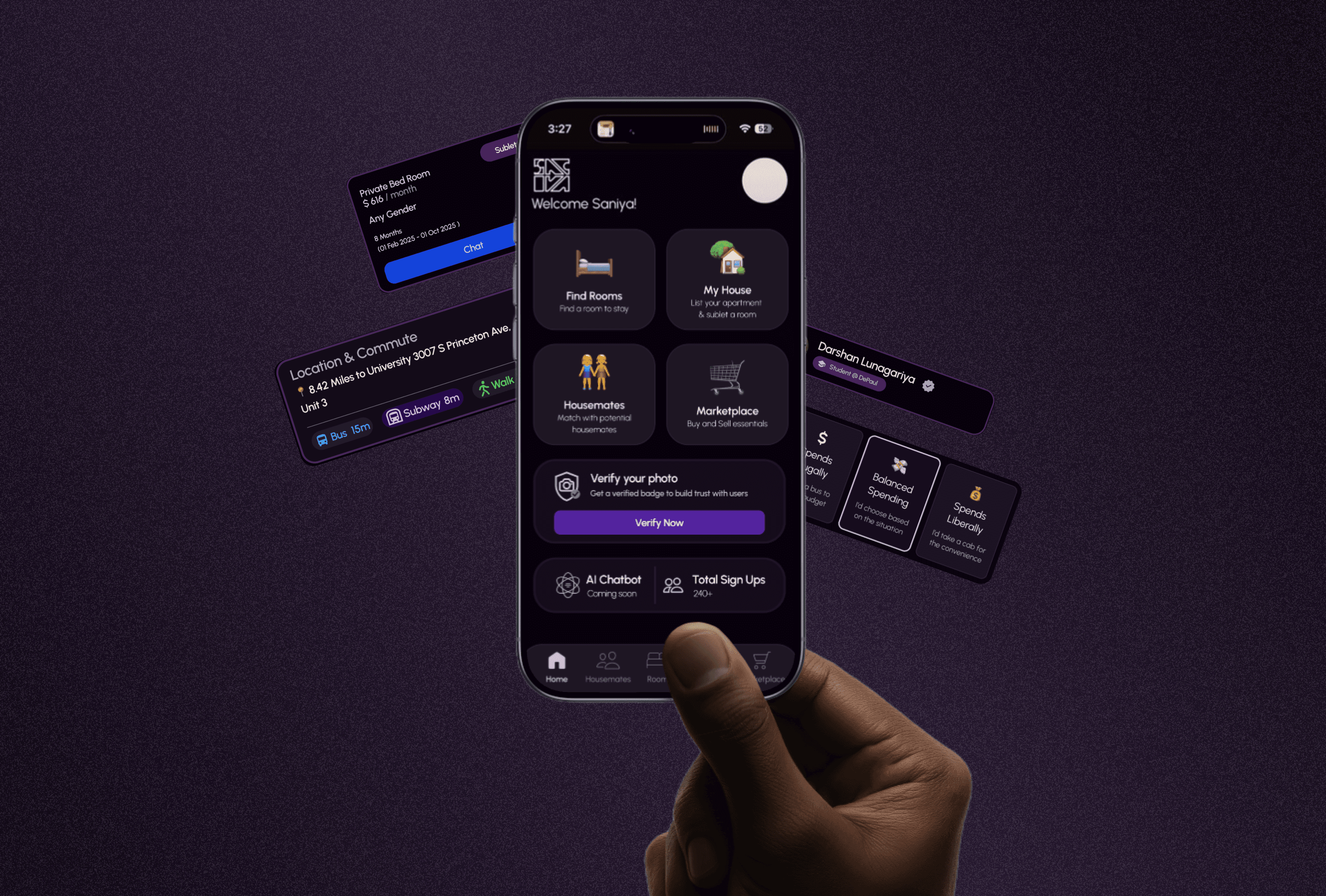
The Trust Gap
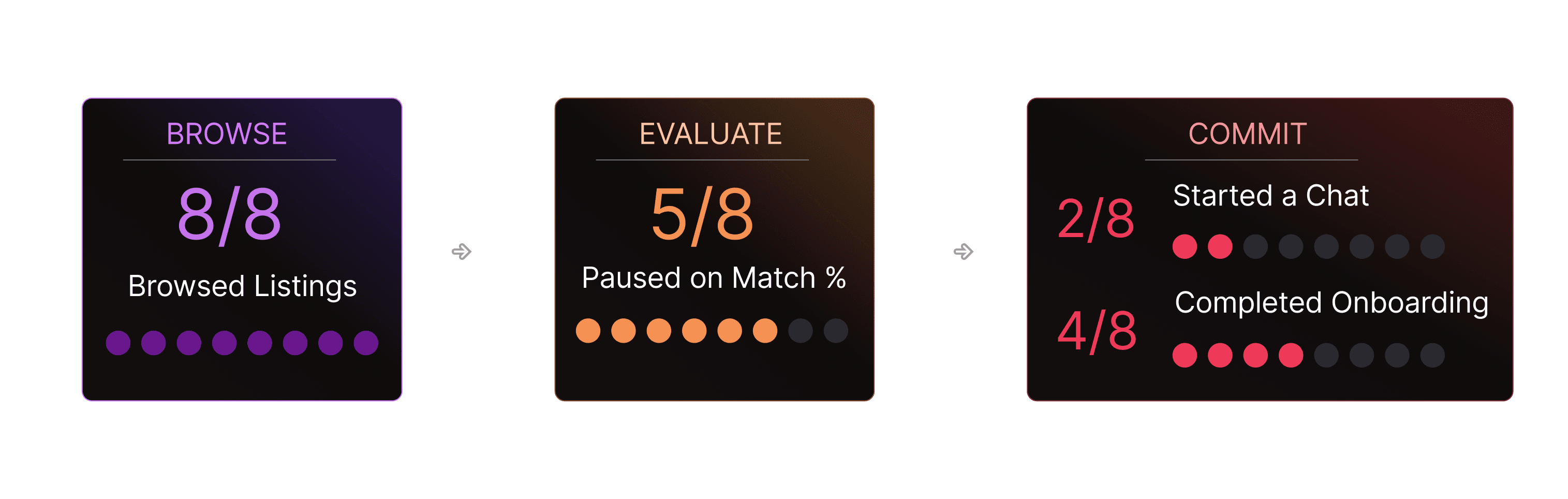
In usability testing, students moved smoothly through discovery. The drop happened at decision moments, when the interface needed to prove trust.
Why Trust Was Failing
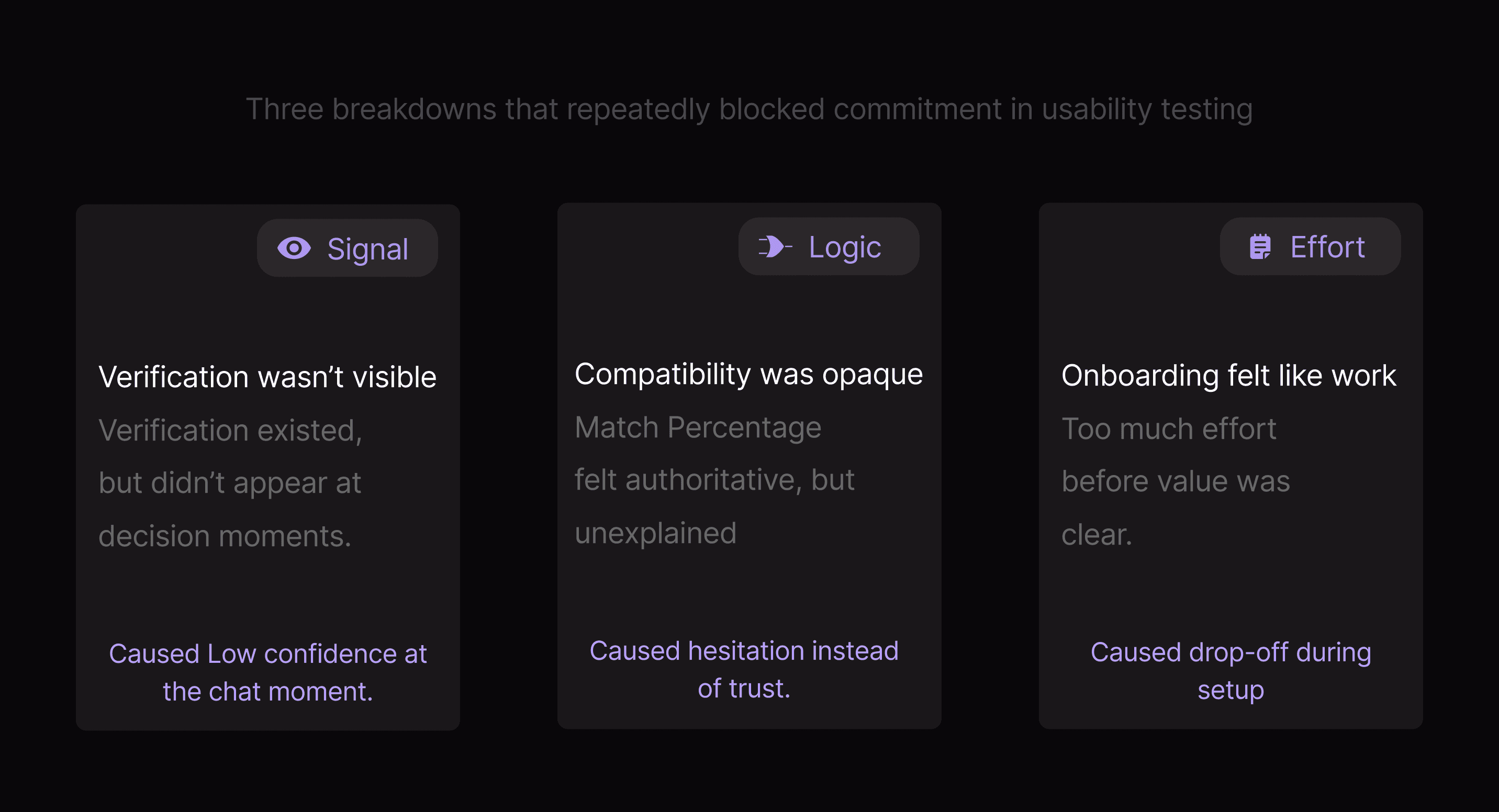
The issue wasn’t demand, it was confidence. Across sessions, users could evaluate options but struggled to trust what they were seeing.
Design Interventions
To address hesitation and low return rates, we redesigned Saciva around one core principle: reduce uncertainty before asking for commitment.
Each intervention targeted a specific moment where confidence dropped.
1) Simplifying Entry
Reducing cognitive load before commitment
Problem
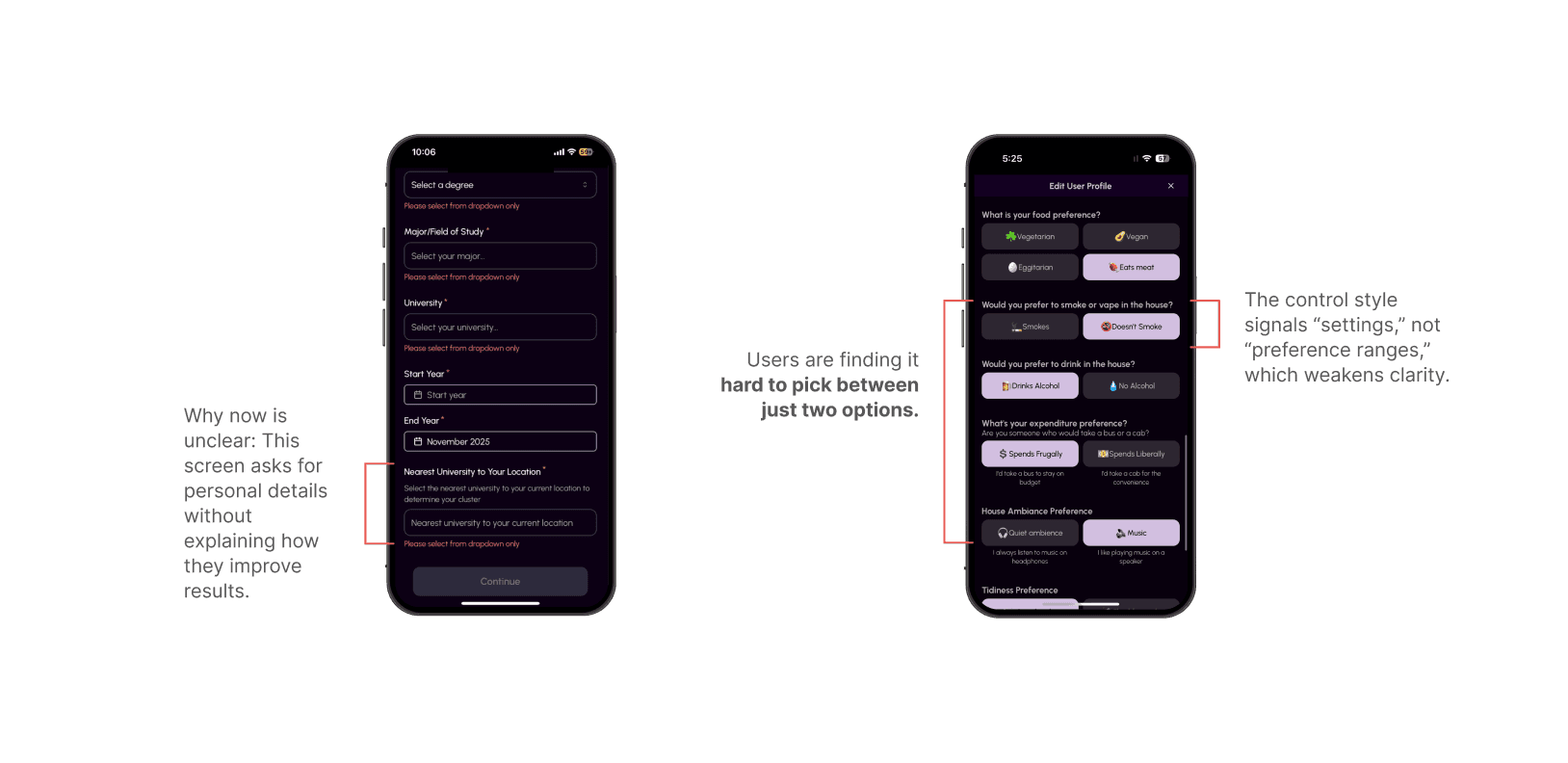
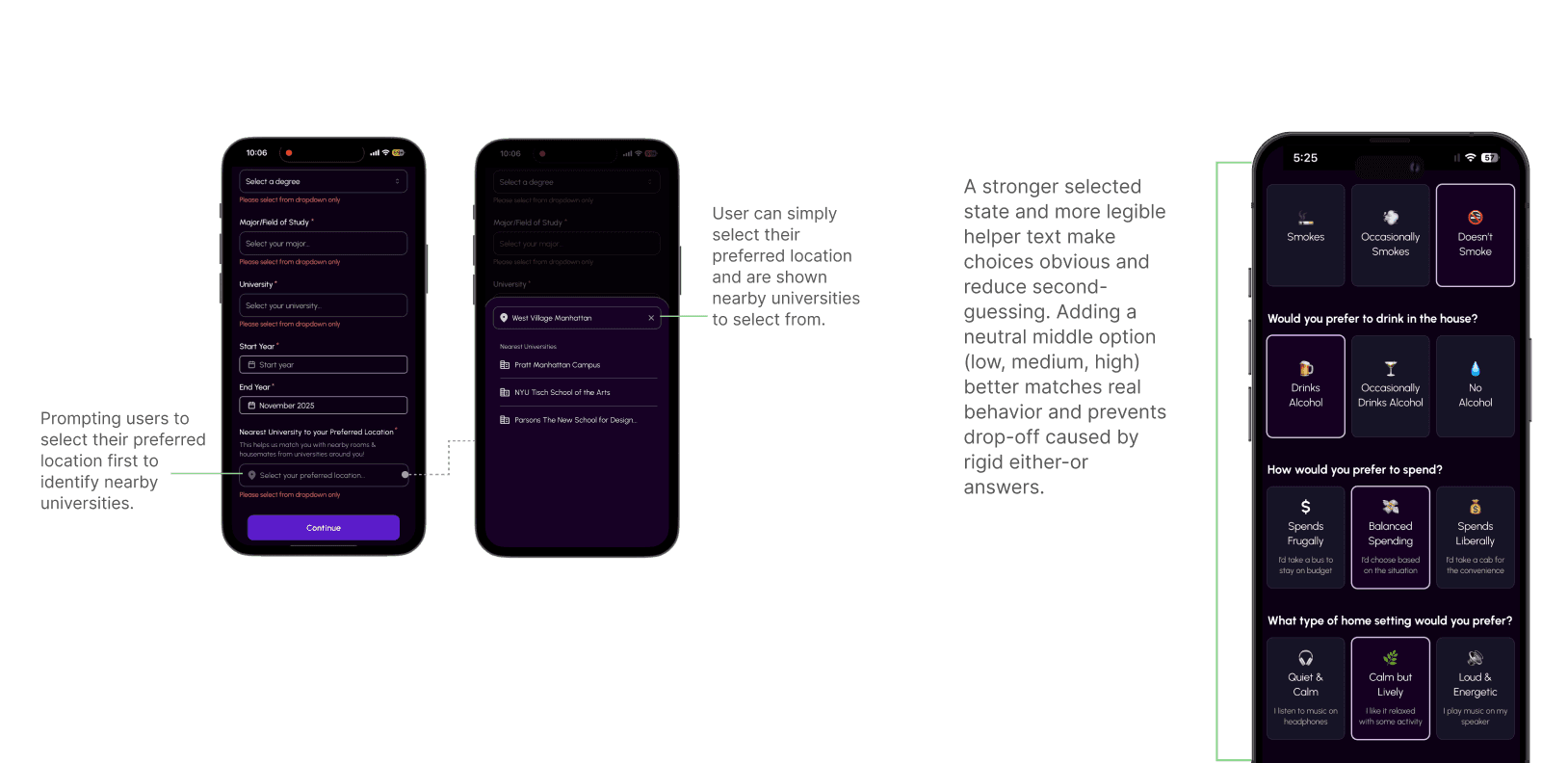
Onboarding required detailed preferences before users understood the value of the app. Binary choices and unfamiliar inputs increased effort at the earliest stage.
Design Shift
We replaced rigid, either-or selections with flexible preference ranges and familiar input patterns. Guidance copy clarified why information was needed, and progress cues reduced perceived effort.
Why It Matters
When early effort feels manageable, users complete setup faster and are more likely to explore the platform.
2) Making Trust Visible
From implied credibility to visible signals
Problem
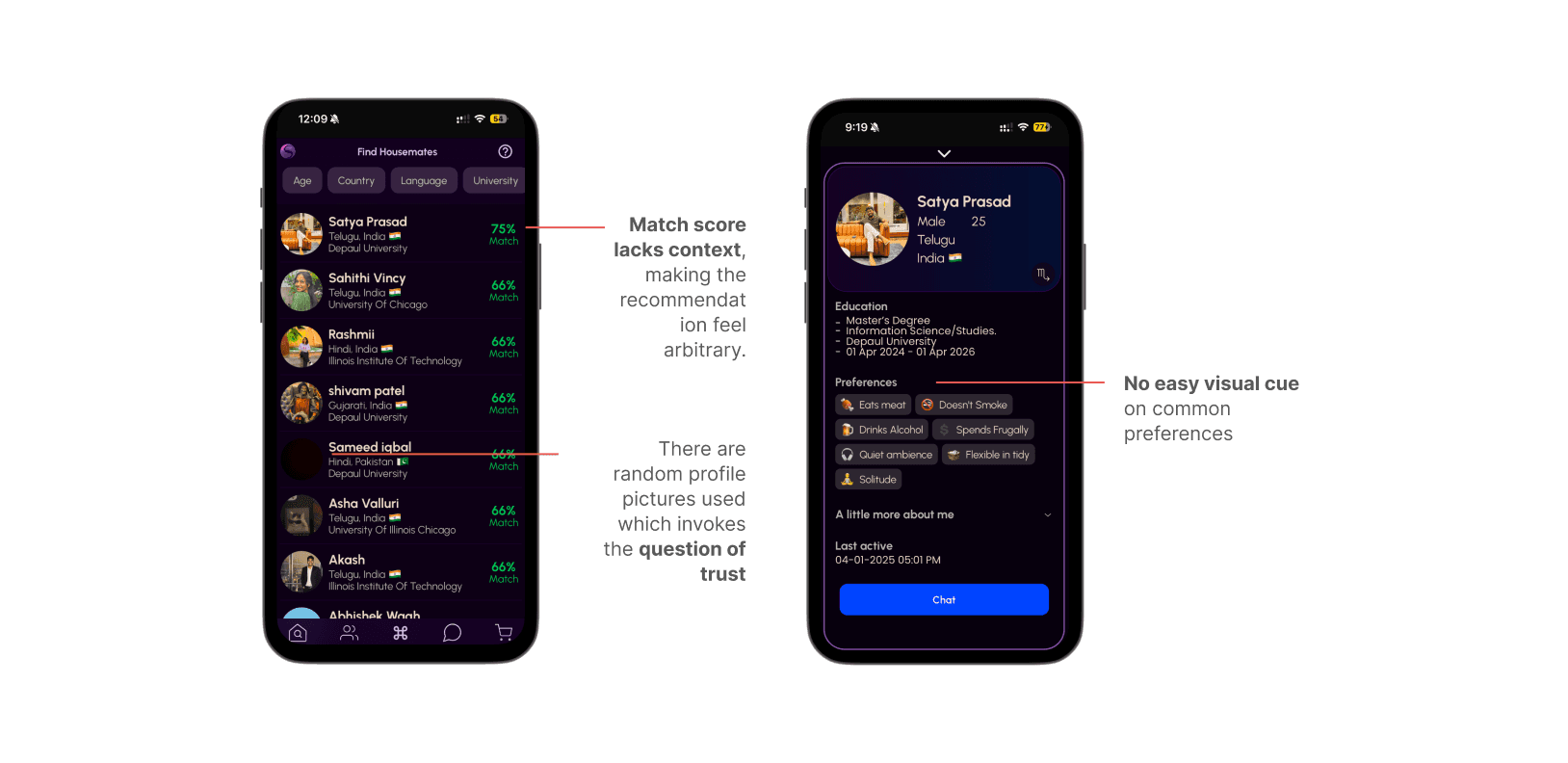
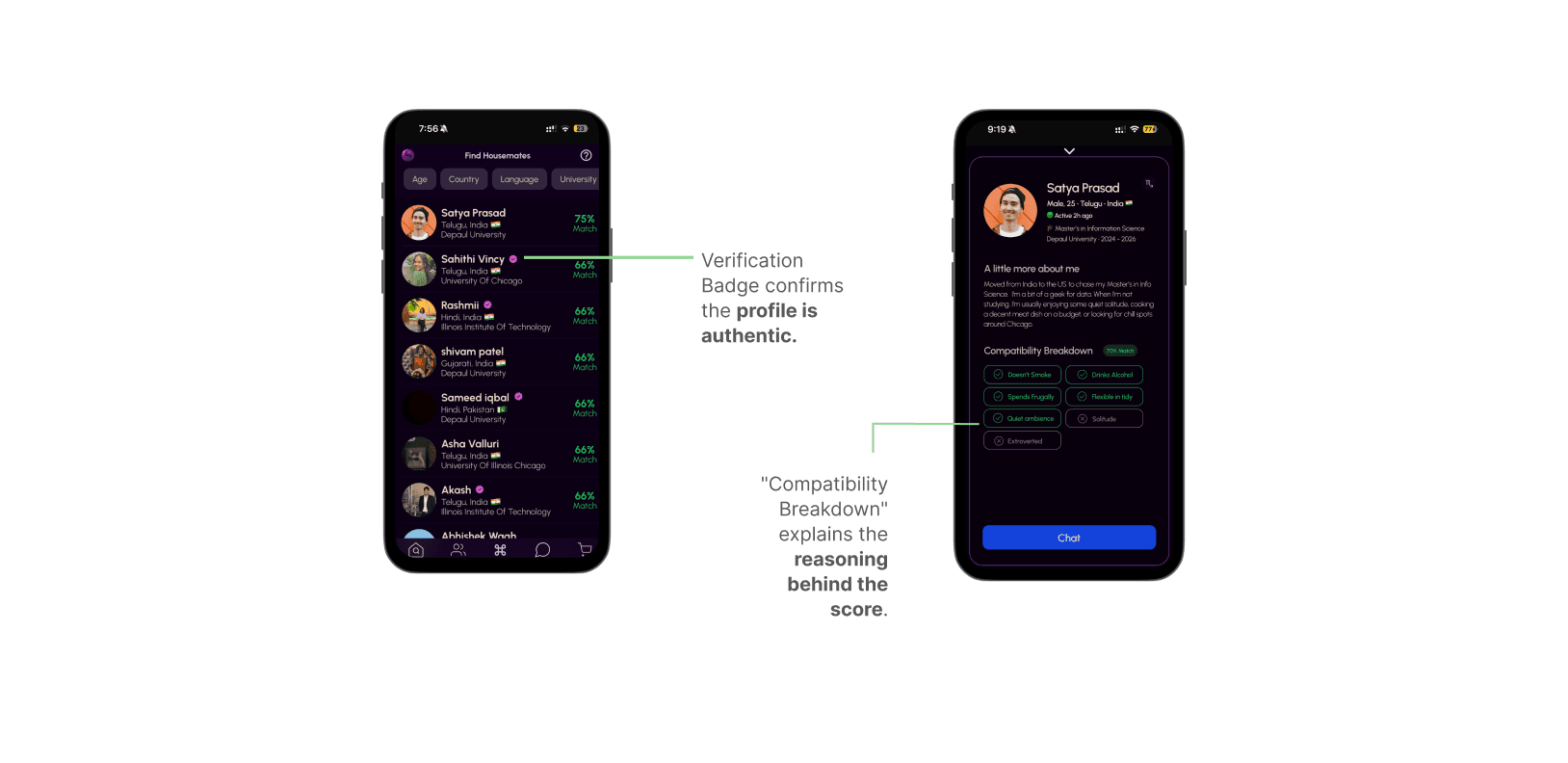
Users questioned profile legitimacy and the logic behind match percentages. Trust was expected but not demonstrated.
Design Shift
We introduced visible verification markers and transparent compatibility explanations. Profiles now display verification badges, and match scores are supported by a breakdown of shared attributes.
Why It Matters
Transparency increases confidence. When users understand why a match exists, they are more likely to initiate conversations.
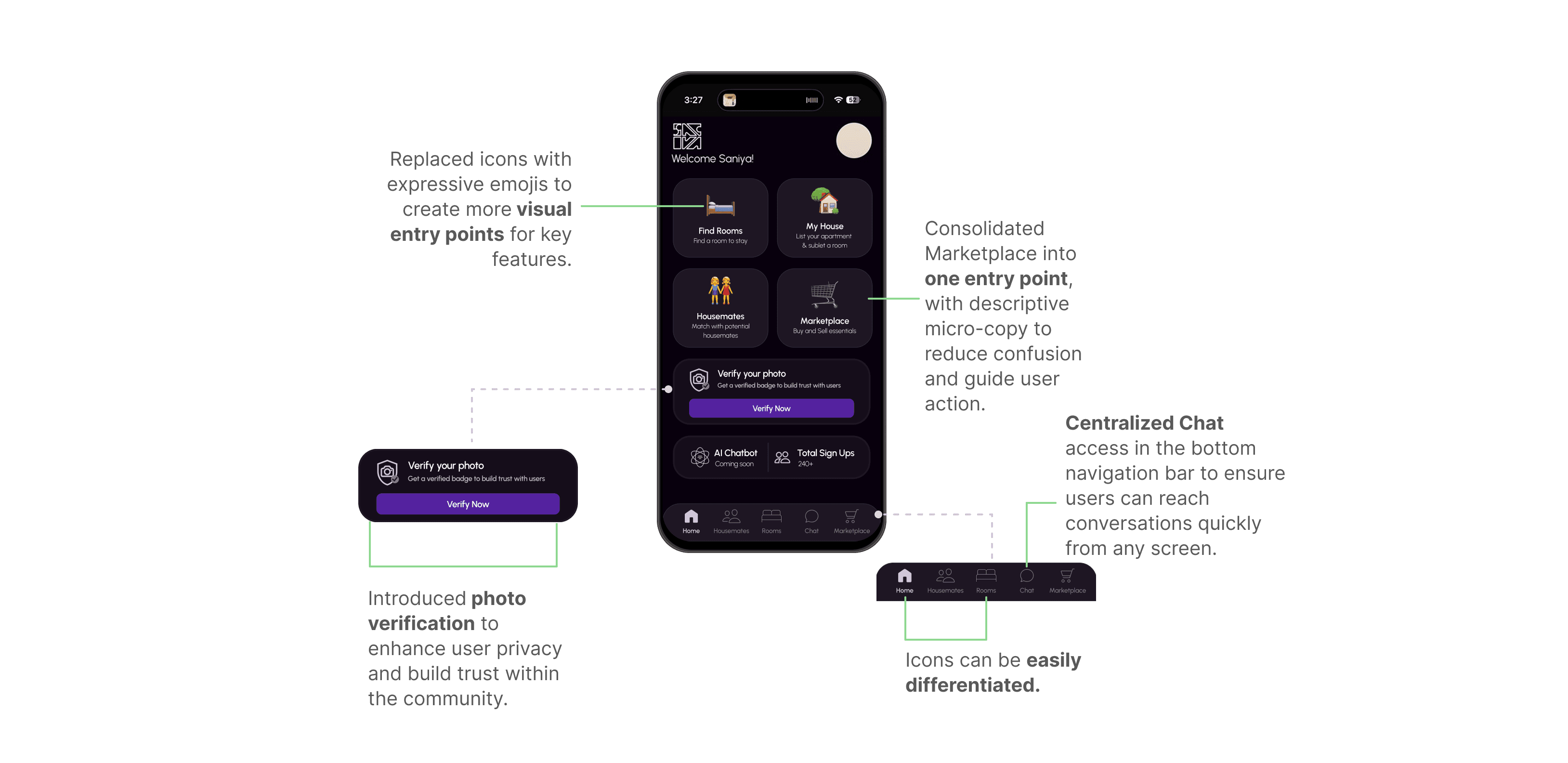
3) Clarifying Navigation & Structure
Reducing hesitation through predictable pathways
Problem
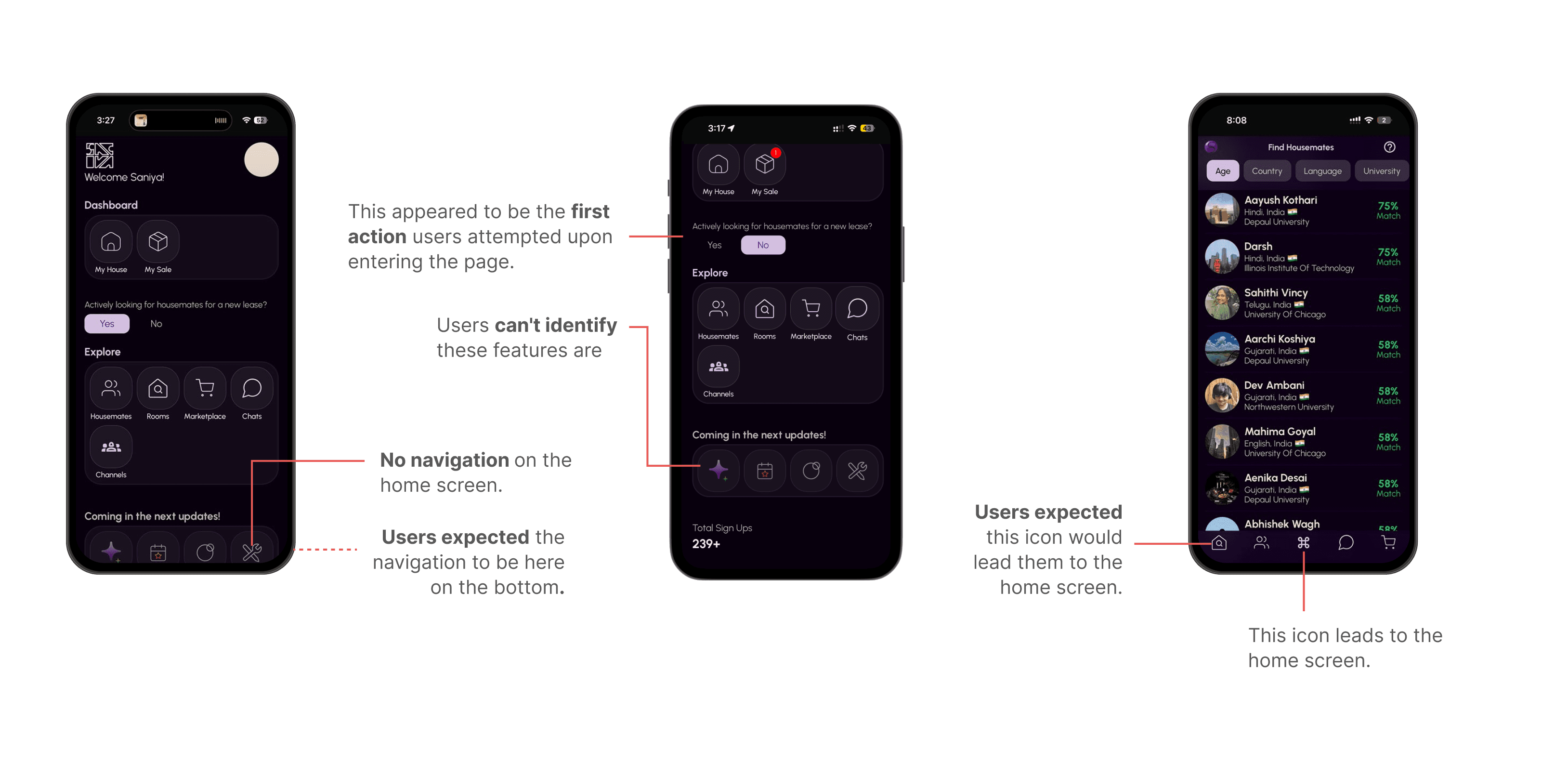
Users relied on exploration instead of recognition. Navigation lacked consistency, and similar icons caused mis-taps and confusion.
Design Shift
We introduced a persistent bottom navigation bar, clarified iconography, and simplified the Home hierarchy. Marketplace flows were unified to reduce structural friction.
Why It Matters
Predictable navigation reduces search time and lowers cognitive strain, increasing the likelihood of task completion.
4) Supporting Confident Decisions
Designing for evaluation, not just browsing
Problem
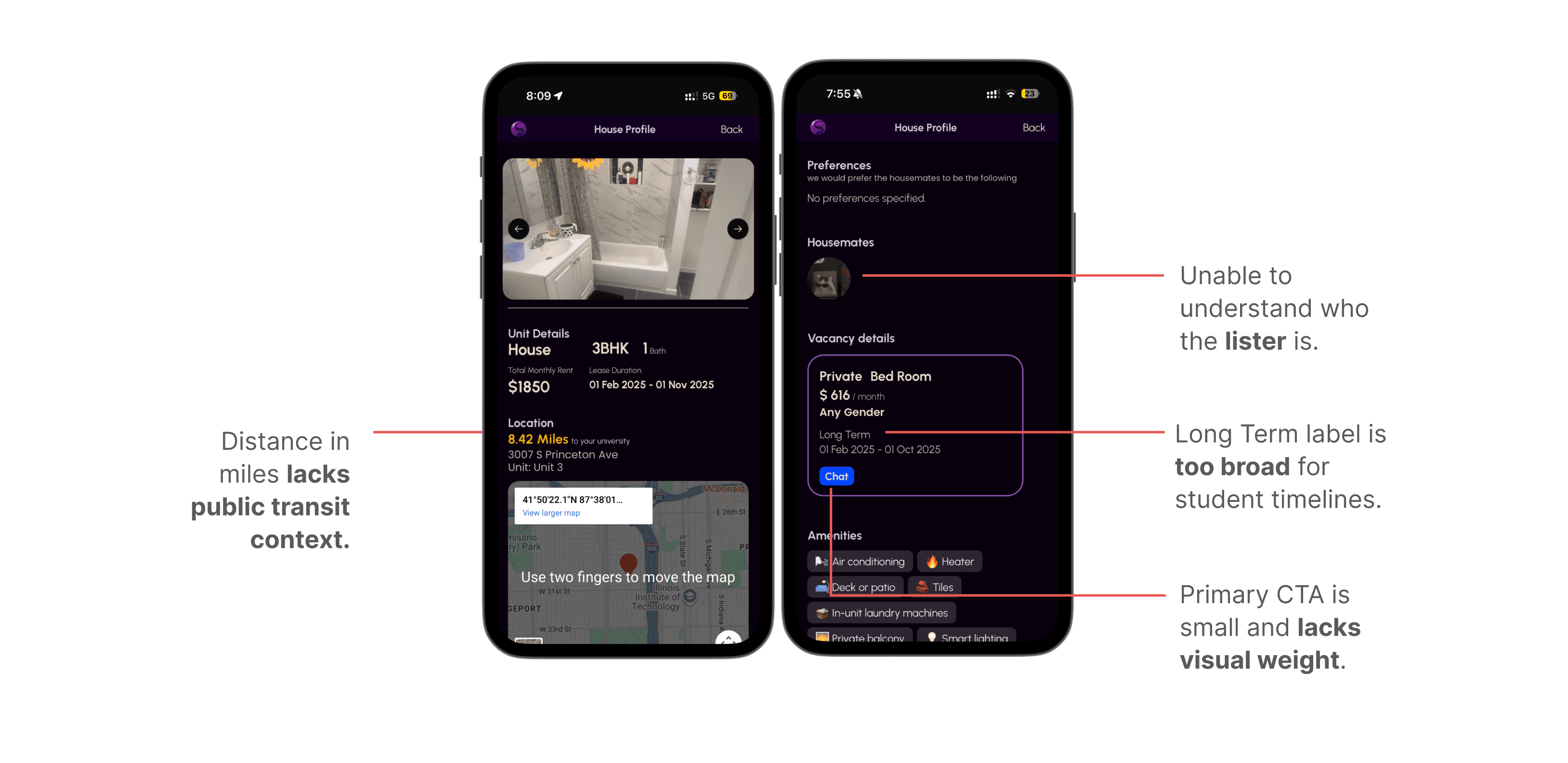
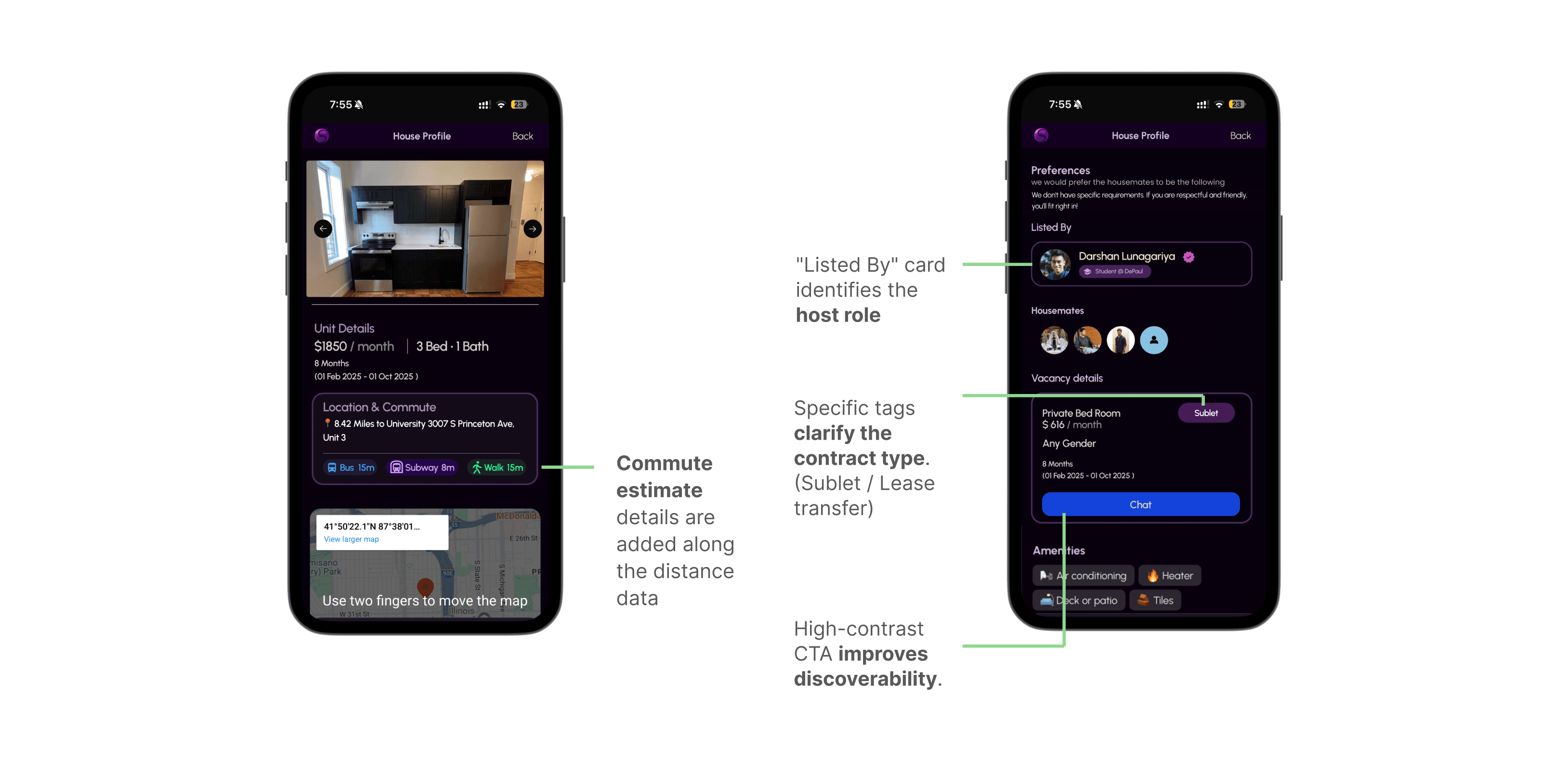
Listings provided summaries but lacked decision-ready detail. Users struggled to evaluate lease terms, commute feasibility, and seller credibility.
Design Shift
We added lease clarity tags, commute time estimates, detailed product pages, wishlist indicators, and stronger CTAs to support confident evaluation.
Why It Matters
Clarity reduces hesitation. When users can evaluate options quickly, they move from browsing to action.
Validation & Impact Direction
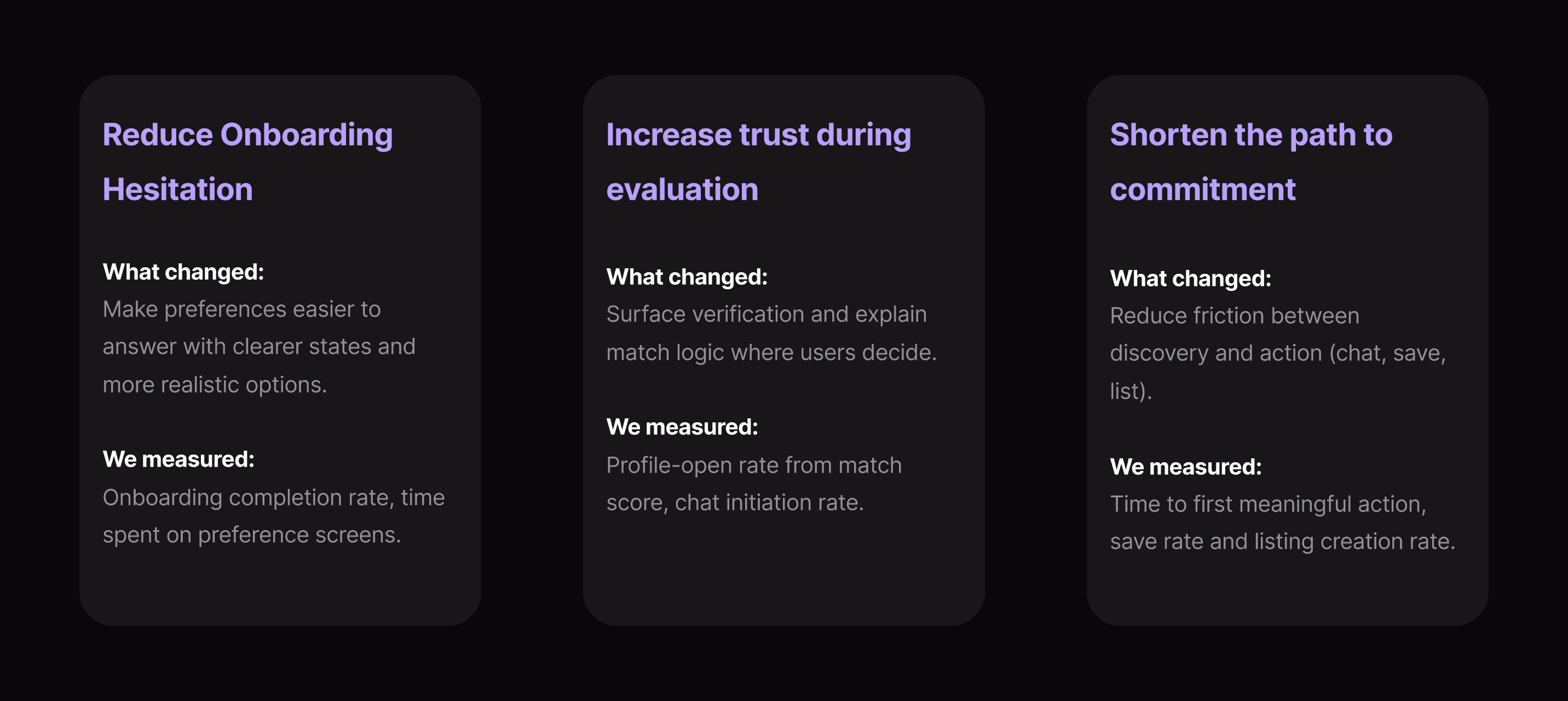
These design changes weren’t aesthetic refinements. They were designed to shift behaviour, so the next phase validated three outcomes: reduced hesitation during onboarding, stronger trust perception during profile evaluation, and a faster path to core actions like chat, save, and list.
Reflection
This project clarified something I now treat as a default assumption: early adoption fails less because of missing features and more because users do not feel safe making the next step. Saciva did not need more functionality. It needed decision-grade clarity at the moments where people hesitate. The work pushed me to design for behavioral readiness: surfacing trust cues at the right time, explaining logic instead of asserting it, and reducing effort before value is felt. It also reinforced that credibility is designed, not claimed, and every interaction either compounds trust or taxes it.
Trust cues must appear at decision moments, not buried in settings or profiles
Adoption is a confidence curve, not a feature checklist
Explainability beats authority: show why, not just what
Reduce cognitive load before commitment, especially in onboarding
Measure the right thing: time-to-action and commitment signals, not clicks